





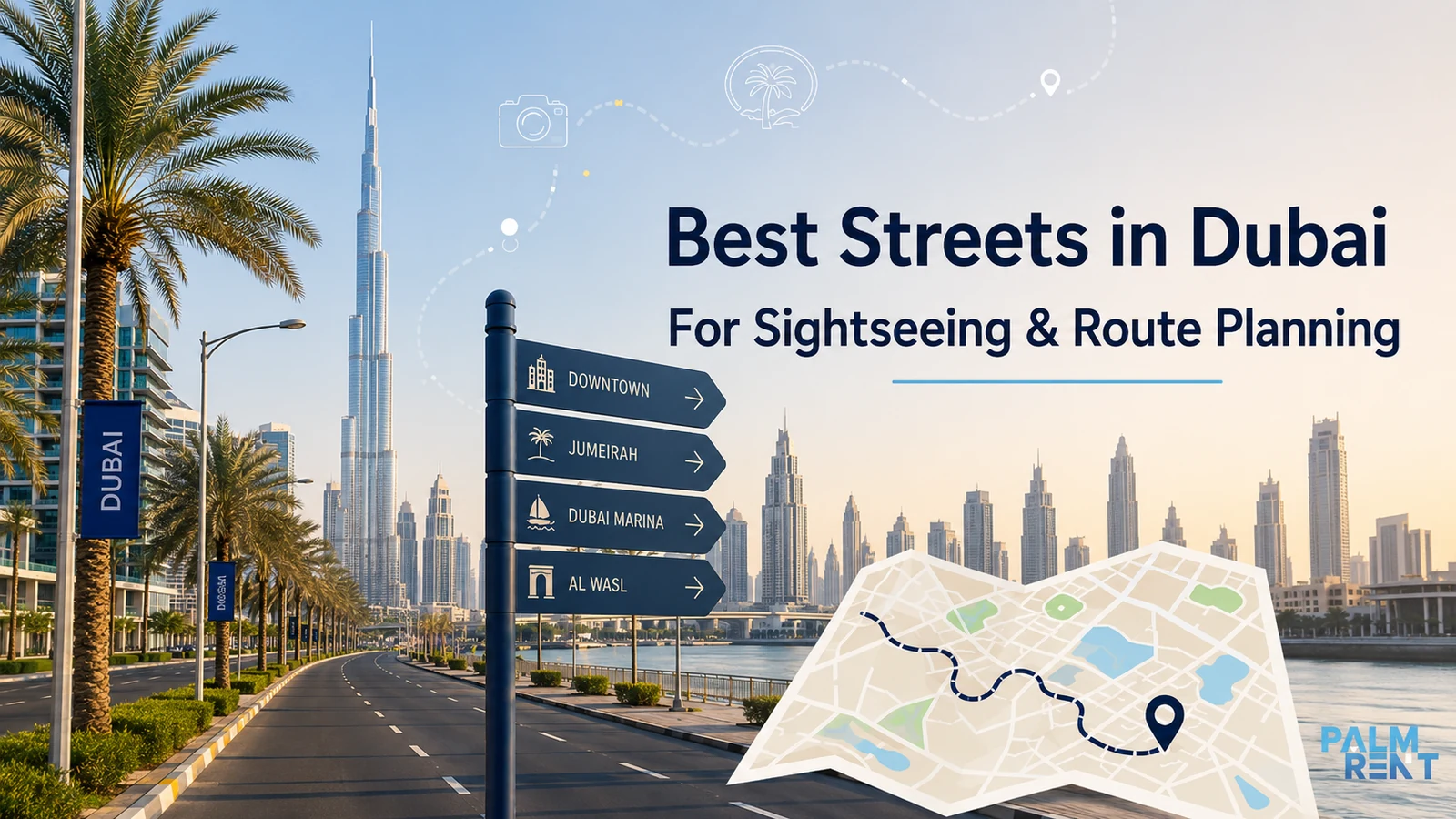
Dubai’s streets are not just ways to get from one place to another. Some of them are part of the travel experience itself. One street takes you close to Burj Khalifa and Dubai Mall, another follows a beachside promenade in JBR, while a route around Deira or Bur Dubai brings you closer to souks, Dubai Creek and the older side of the city.
This guide is written for visitors who want to choose the best streets in Dubai from a traveller’s point of view. The focus is on walking, photography, cafés, local character, access, timing and daily route planning — not on promoting services or direct sales.
Quick summary: For a first Dubai trip, Downtown and Sheikh Mohammed bin Rashid Boulevard are ideal for a modern city feel, JBR and Jumeirah work well for beachside walks, Alserkal Avenue is better for art and galleries, while Al Fahidi and Al Seef are stronger choices for Old Dubai.
How to choose the best streets in Dubai
Not every famous street in Dubai offers the same kind of experience. Some are better for walking and photography, some for food and shopping, some for seeing Dubai’s skyline, and others are mainly useful as connecting roads. The best choice depends on what you want from the day.
- For walking and photos: Downtown Dubai, City Walk, JBR and Al Seef are practical choices.
- For beachside cafés: Jumeirah and The Walk at JBR are more relaxed and scenic.
- For culture: Al Fahidi, Al Seef, Baniyas Road and Alserkal Avenue are worth considering.
- For a drive through modern Dubai: Sheikh Zayed Road is more of a major city route than a walking street.
- For families: choose areas with clear parking options, taxi access, metro access or walkable surroundings.
If you are still building your itinerary, the guide to the best places to visit in Dubai can help you connect these streets with the city’s main attractions.
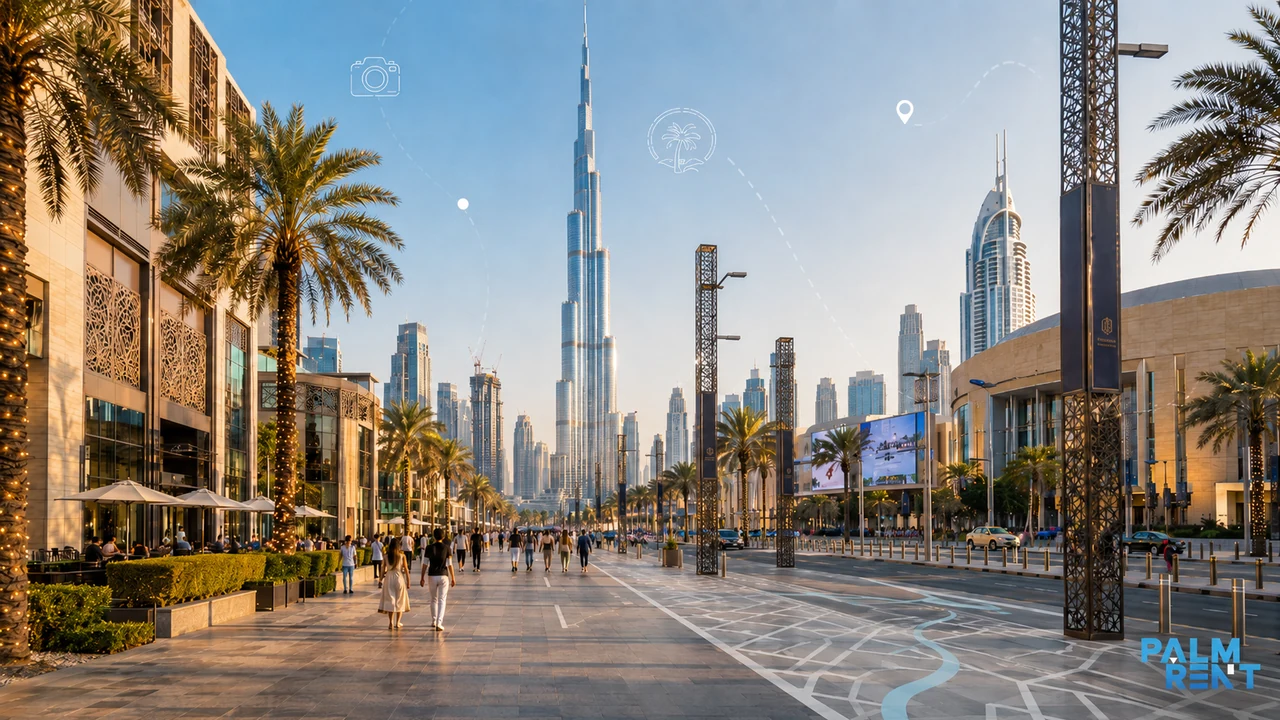
Sheikh Mohammed bin Rashid Boulevard: Downtown Dubai’s main walking route
Sheikh Mohammed bin Rashid Boulevard is one of the easiest places to start a city walk in Dubai. It connects you with Burj Khalifa, Dubai Mall, Dubai Opera, cafés, restaurants and open-air walking areas, especially around Downtown Dubai.
This route suits travellers who want a compact area with modern architecture, food stops, shopping and photo opportunities. If you are visiting with family, try to avoid the busiest hours around Dubai Mall and the Dubai Fountain area.
The Walk at JBR: a beachside street for food, shopping and evening walks
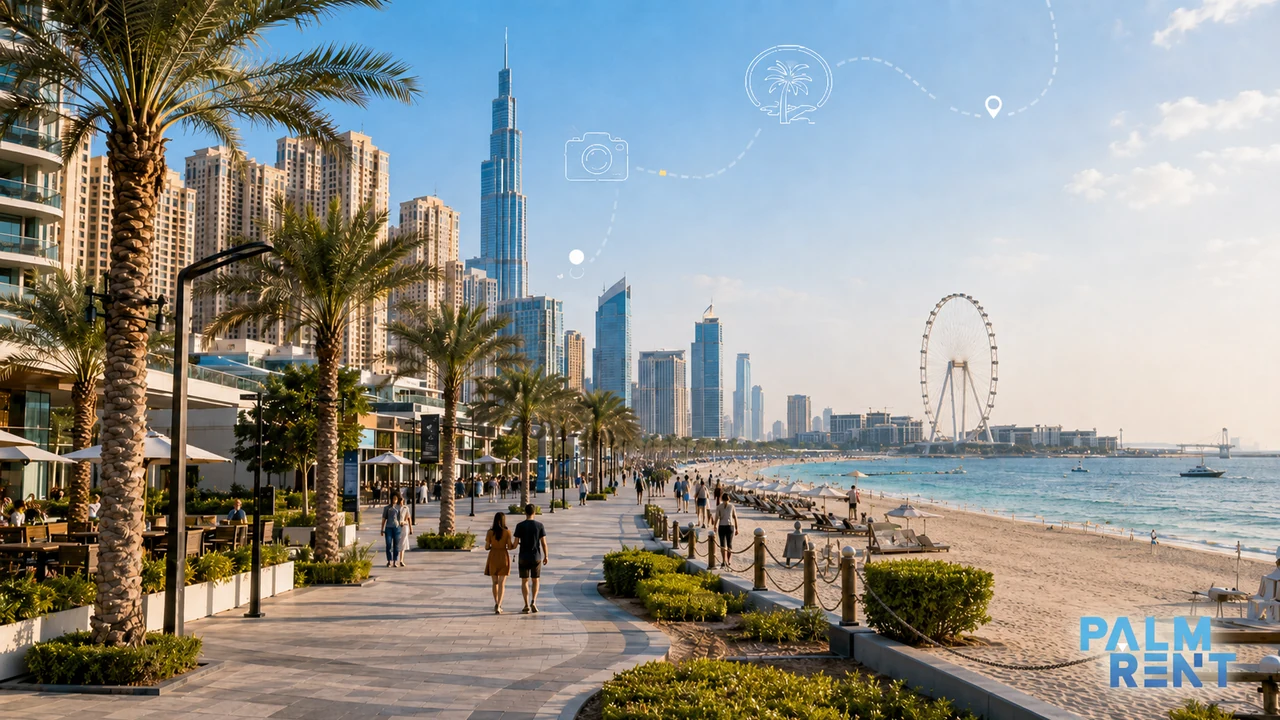
The Walk at Jumeirah Beach Residence is one of Dubai’s most recognisable beachside routes. It works well for walking, dining, cafés, shops, open-air atmosphere and beach access. The official JBR website describes JBR as a beachside boulevard with shopping, dining and entertainment across a 1.7 km promenade.
If you want one area that works during the day and at night, JBR is a strong choice. During the day, it gives you beach access; in the evening, the lighting, restaurants and promenade atmosphere become more lively. For official destination details, check the official JBR website.
Jumeirah Street: beaches, cafés and a calmer city rhythm
Jumeirah Street and the surrounding roads are good for travellers who do not want to see Dubai only through towers and malls. The area gives access to beaches, cafés, restaurants, well-known hotels and several relaxed city stops.
For a better experience, plan Jumeirah as a chain of smaller stops: a beach, a café, a local shopping stop and perhaps a short photo break. If your day includes several points along Jumeirah, check driving time and parking before you start.
Alserkal Avenue: art, galleries and a different side of Al Quoz
If you enjoy art spaces, galleries, exhibitions and independent cafés, Alserkal Avenue is one of Dubai’s most distinctive areas. It is located in Al Quoz and feels very different from classic tourist streets.
Dubai Culture describes Alserkal Avenue as a cultural and arts district in Al Quoz, home to more than 70 contemporary art galleries, creative spaces and community venues. Before visiting, it is useful to check current exhibitions and events on the official Dubai Culture page for Alserkal Avenue.
Al Fahidi, Al Seef and Baniyas Road: streets near Old Dubai
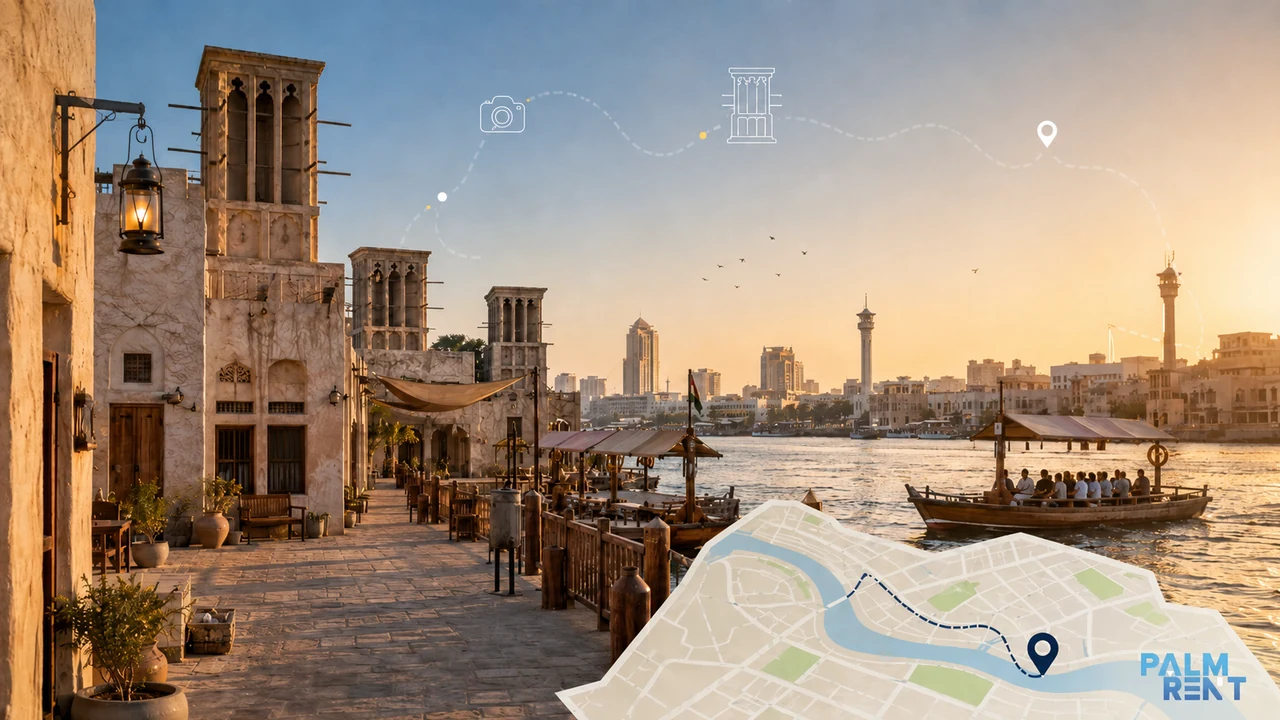
For Old Dubai, start around Al Fahidi Historical Neighbourhood, Al Seef and Dubai Creek. In this part of the city, the streets and lanes are more about traditional architecture, souks, abras, small cafés and heritage atmosphere.
Al Fahidi is useful for photography, slow walking and understanding Dubai’s older architecture. Al Seef adds a more polished waterfront feel beside Dubai Creek. For a deeper route, read the Old Dubai, Dubai Creek and traditional souks guide.
For official background on the historic district, you can also check the Visit Dubai guide to Al Fahidi Historical Neighbourhood.
City Walk: modern open-air walking, cafés and shopping
City Walk is more of a modern urban destination than a traditional street. It is useful for walking, dining, cafés, shopping and open-air city time, especially if you want a break from indoor malls.
The advantage of City Walk is that several experiences are close to each other: walking, food, shopping, photos and coffee stops. It is also convenient for families because the area is relatively easy to plan around on foot.
Sheikh Zayed Road: Dubai’s skyline route, not a walking street
Sheikh Zayed Road is one of Dubai’s best-known routes, but it should be understood correctly. It is mainly a road for movement, skyline views and access between major districts, not a street for long walks.
If you use this route, treat it as part of your daily transfer rather than the main sightseeing stop. For walking, photos and safer stops, Downtown, DIFC, City Walk or JBR are better choices.
Satwa and Al Wasl: more local streets for food and everyday Dubai
Satwa and Al Wasl are useful if you want to see a more everyday side of Dubai. Satwa is known for casual food, small shops and cultural variety, while Al Wasl connects cafés, villas, local shops and access toward Jumeirah and City Walk.
These streets may not be as iconic as Downtown or JBR, but they give a more local city feel. If food, cafés or less touristy neighbourhoods interest you, add one of these areas to a half-day route.
Suggested routes for exploring Dubai’s streets
To avoid losing too much time in traffic, choose streets by area. Dubai is spread out, and a scattered route can turn a simple day into a long transfer between neighbourhoods.
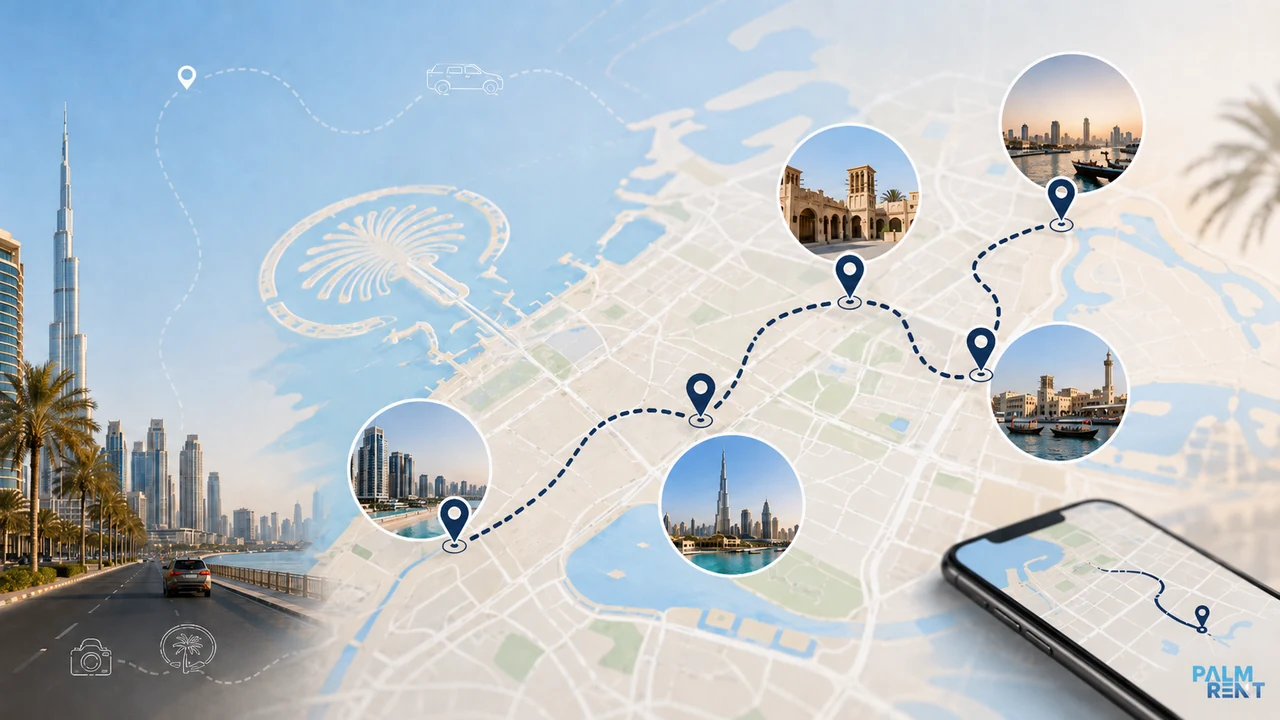
Half-day route for modern Dubai
- Start in Downtown Dubai and Sheikh Mohammed bin Rashid Boulevard
- Stop around Dubai Mall, Burj Khalifa or Dubai Opera
- Continue to City Walk or DIFC
- End the day at JBR or Jumeirah for food and a walk
Half-day route for Old Dubai
- Start at Al Fahidi Historical Neighbourhood
- Walk through Al Seef beside Dubai Creek
- Continue toward Baniyas Road and Deira’s souks
- If you have time, take a short abra ride across the creek
One-day mixed route
- Morning: Old Dubai, Al Fahidi and Al Seef
- Midday: a coffee or rest stop around City Walk or Al Wasl
- Afternoon: Downtown and Sheikh Mohammed bin Rashid Boulevard
- Evening: JBR, Jumeirah or another beachside route
If you are still comparing metro, taxis, walking and private transport, the Dubai public transport guide can help you choose a more suitable option for each route.
Transport, parking and the best time to visit
In Dubai, choosing a street is not only about how attractive the destination looks. Timing, traffic, parking, heat and distance between stops also matter. Downtown and JBR are often more enjoyable in the evening, but they can also get busier. Old Dubai is usually more comfortable in the morning or cooler parts of the day.
- Beachside streets are usually more pleasant around sunset.
- Al Fahidi and Al Seef are better in the morning or late afternoon.
- For Downtown, check busy periods around Dubai Mall and major events.
- On Sheikh Zayed Road, do not plan random stops for photos; choose safer destination areas instead.
- For public parking areas and parking zones, check the official Parkin parking information before you go.
If your plan includes driving in the city, it is also useful to review driving, parking and Salik rules before finalising your route.
Final thoughts: which Dubai street fits your trip?
If you want modern, iconic Dubai, start with Sheikh Mohammed bin Rashid Boulevard and Downtown. If you prefer beachside walks and evenings out, JBR and Jumeirah are better choices. If you want culture, history and a more local feel, prioritise Al Fahidi, Al Seef and the streets around Dubai Creek. For art and galleries, Alserkal Avenue is the stronger option.
For multi-area days, plan your route in a logical order. If your schedule includes several streets and neighbourhoods in one day, check the distance between attractions, busy hours, taxi costs, metro access and parking first. If you need to compare transport options with your route, the Palm Rent Dubai branch page can be reviewed only as an additional route-planning reference.
FAQs about the best streets in Dubai
What is the best street in Dubai for walking?
Sheikh Mohammed bin Rashid Boulevard in Downtown, The Walk at JBR, City Walk and Al Seef are among the better options because they combine walking space with food, cafés, shops or nearby attractions.
Do I need a car to explore Dubai’s streets?
For areas such as Downtown, JBR and Old Dubai, you can plan around metro, taxis and walking. If one day includes scattered areas such as Jumeirah, Al Quoz, Downtown and Deira, compare transport options before you go.
Which Dubai streets are better for evening walks?
JBR, Downtown, City Walk and parts of Jumeirah are better for evening walks because they offer restaurants, cafés, lighting, open-air spaces and a livelier atmosphere after sunset.
How should I check parking before visiting Dubai streets?
Before you go, check the parking area, active hours, fees and restrictions for the specific district. Parking information in Dubai can vary by location and time, so it is better to use the official Parkin source.
Where can I find older streets and heritage areas in Dubai?
Al Fahidi, Al Seef, Dubai Creek, Baniyas Road and the Deira souks are better choices for a more historic and cultural side of Dubai.
Recommended articles to read next






Check available cars and daily rental prices
With Palm Rent, you can choose the right car for your trip or daily use with clear terms and professional support.
